Spiral Review Sprints: How to Actually Fit Spiral Review Into Your Math Block
Why spiral review matters more now
We all know spiral review matters, and almost none of us have time for it. You teach a skill in September, and by February half the class acts like they've never seen it.
That's about to matter more in Texas. Spring 2027 is the last STAAR for grades 3 through 8. Starting in 2027-28, kids take the Student Success Tool at the beginning, middle, and end of the year, so a skill that never comes back can show up as a gap by January.
Here's the system I built on my old campus. I call it Spiral Sprints.
Where the idea came from
As a math instructional specialist at a Title 1 campus, my teachers kept asking for a better way to review before the big end-of-year test. My husband works in tech, and his team uses Scrum, a system built on sprints: short, focused work cycles that end with a finished product.
In a classroom, a sprint is two to three weeks of reteaching and review. The product is students mastering specific skills, and the people waiting on it are parents and next year's teacher.
The next year, our campus went from a B to an A. Sprints don't get all the credit, but they helped our kids master more skills before moving up a grade.
Setting up your sprints
Plan this with your grade-level team. It takes about one meeting.
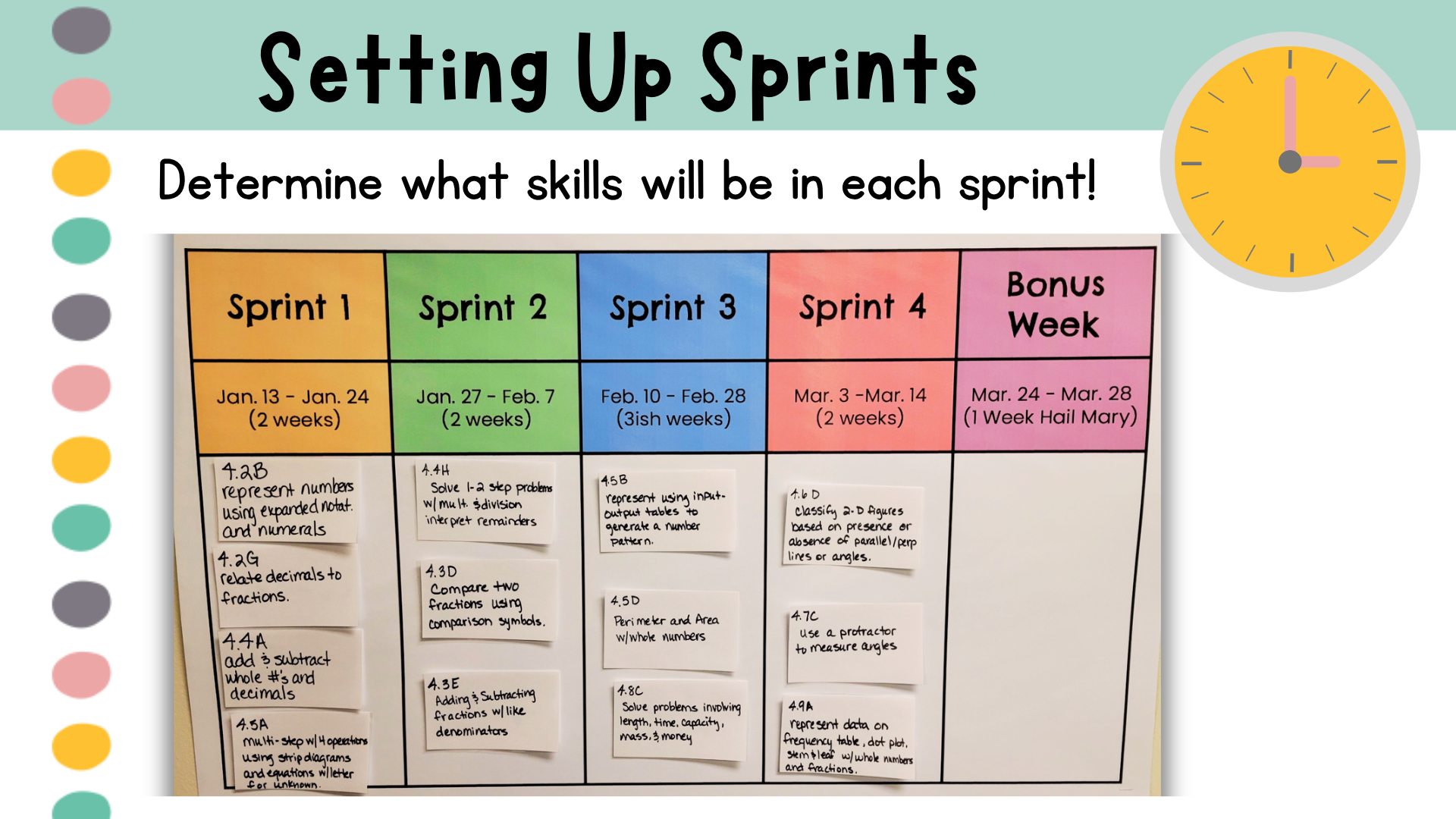
- Count your weeks. Work backward from your test date. We had 10 weeks, so two-week sprints gave us five.
- Write each TEKS on a card. Shrink it to a few words, like "4.2G Relate fractions to decimals." Magnetic tape on the back lets you move cards around the board.
- Spread 2 to 3 skills across each sprint. Skills taught early in the year go first. Skills you haven't taught yet go near the end.
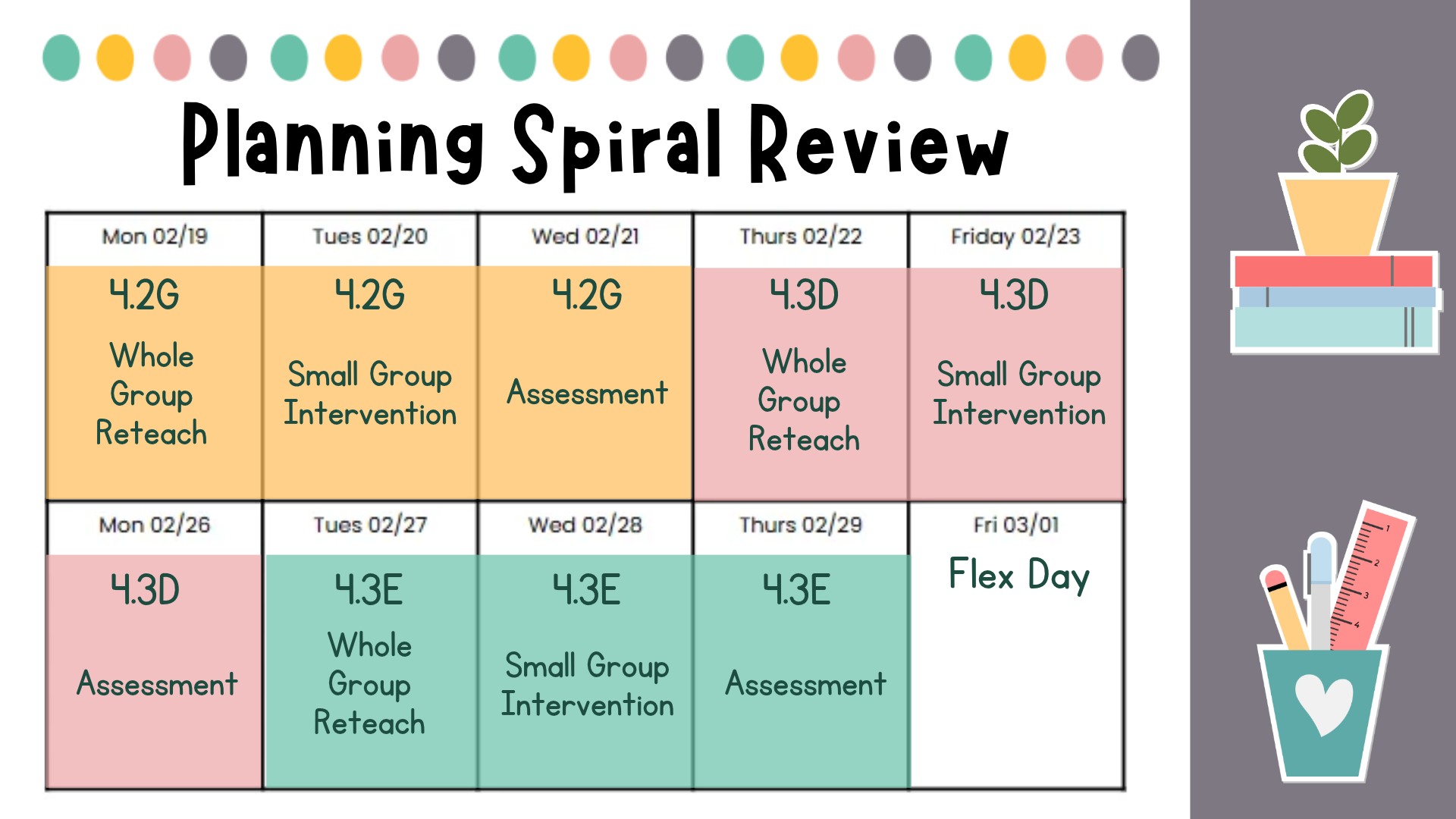
- Map each sprint day by day. Give each skill at least three days, mark holidays, and save the last day as a flex day.
- Pick a skills tracker. A digital one calculates mastery percentages for you, which makes grouping fast.
What a sprint looks like day to day
We had 90-minute blocks: 60 minutes for the current unit, 30 for sprints. Each skill gets a three-day cycle, and the Math Bestie TEKS bundles have the materials for every day.
Day 1: Whole group. Reteach with the guided notes, anchor chart, and a CRA lesson. Collect a quick check and sort it by mastery.
Day 2: Small groups. Pull the kids who need it while the reteach is fresh. Use the student activity, a Write About Math prompt, and the CRA activities.
Day 3: Check. Give the exit ticket and log results in the skills tracker.
Sprint check-ins
At the end of each sprint, check the tracker and ask whether each skill hit its mastery goal.
Yes: Write the percentage on the card and take it off the board. Keep it fresh with Problem of the Day.
No: Look at student work for the pattern, move the card to the next sprint, and use that work to build tighter small groups. If several skills keep moving, look for a gap underneath.
If your campus uses Bluebonnet
"My district wants fidelity and there's no time left." I hear you. Sprints can still work without going off-script.
With a 90-minute block, give Bluebonnet about 60 minutes and run sprints in the other 30, the same split my campus used.
With only 60 minutes, spread the cycle out:
- Fluency Practice: Bluebonnet's Maintenance piece is meant for past skills, so point it at your sprint skill.
- Intervention or WIN time: Run your Day 2 small groups.
- Morning work: Give Day 3 exit tickets.
Reteach with Bluebonnet materials first, and pull supplemental resources when kids need another way in. Order sprints by the modules you've finished. Then show your admin the calendar: a plan that leaves the core lesson alone is an easy yes.
Grab the free planning tools
You can download both of these for free:
- A Strategic Plan for Spiral Reviewing: setup, daily plan, FAQ, and a link to editable sprint planning pages for Google Drive.
- Planning Spiral Sprints Workshop: the slides I use to walk teams through planning.
Want the materials to run every sprint? Math Bestie members also get TEKS skills trackers for each grade and bundles for every STAAR-tested math standard in 3rd through 5th, so each skill has what you need for all three days. Join the Math Bestie Membership here.
If you try sprints, tell me how it goes.
